What is Pilates · From Our Archive
Meet the Reformer and Its Foundational Exercises
Get to know the apparatus and the foundational exercises that make it a useful teacher.
2 minute read
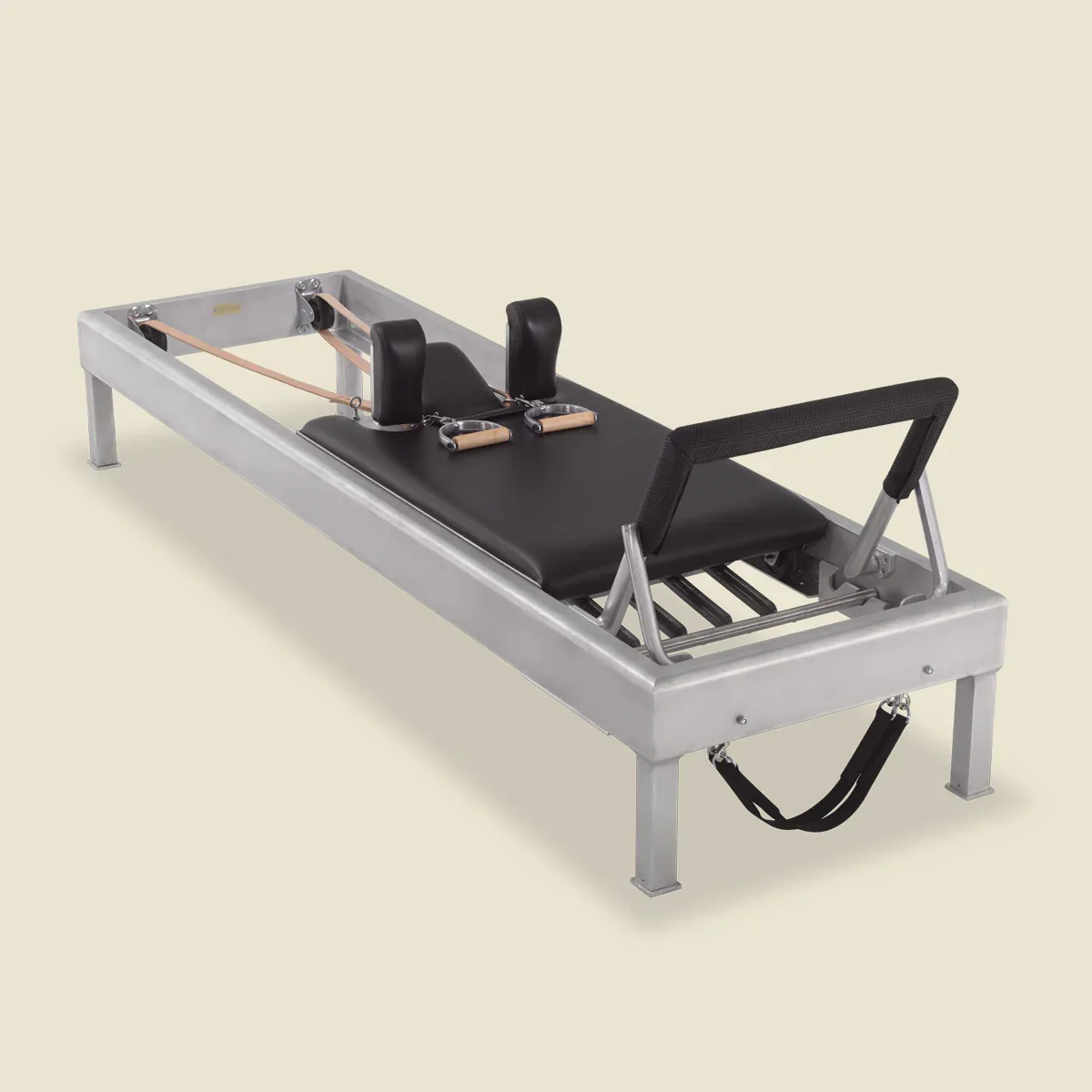
The Reformer is often the first thing people picture when they hear Pilates. A moving carriage, a footbar, straps, and springs can look like a lot to negotiate. Each part has a purpose, and your first lessons give you time to learn the conversation.
The equipment is part of the lesson
Springs provide resistance and, in some movements, assistance. The carriage gives you a moving surface to control. The footbar, straps, and other supports change how you connect to the apparatus. Your teacher chooses the setup for the exercise, equipment, and person using it.
Spring counts are not universal instructions. A number copied from a photograph may describe a different model, a different spring system, or a different student's needs. Learn the setup on the machine you actually use.
Why the foundational exercises matter
Our magazine introduces Footwork, the Hundred, Frogs and Leg Circles, Stomach Massage, Short Box, Elephant, Knee Stretches, Running, and Pelvic Lift. Together, these offer repeated opportunities to explore support, coordination, breathing, and control in different positions.
Footwork gives you an early chance to notice how the feet, legs, pelvis, and trunk work together. Short Box changes the relationship with support. Elephant and Knee Stretches ask you to manage the carriage from another position. The exercise names become more useful as you understand what you are practicing.
Take the lesson beyond the Reformer
Ask how an idea you discover here appears on the Mat, Tower, or chair. The Reformer is part of a larger system, and its lessons can help make other apparatus feel less mysterious.
After class, choose one question for your journal. What changed when you adjusted your setup? Which cue helped you control the return? What do you want your teacher to check next time?
You do not need to master the machine in one session. Learn the safety procedures, build familiarity, and let the foundational exercises keep teaching you.