What is Pilates · From Our Archive
The Science of Pilates and How Practice Develops Over Time
Learning movement takes practice. Explore how familiarity, feedback, and training work together.
2 minute read
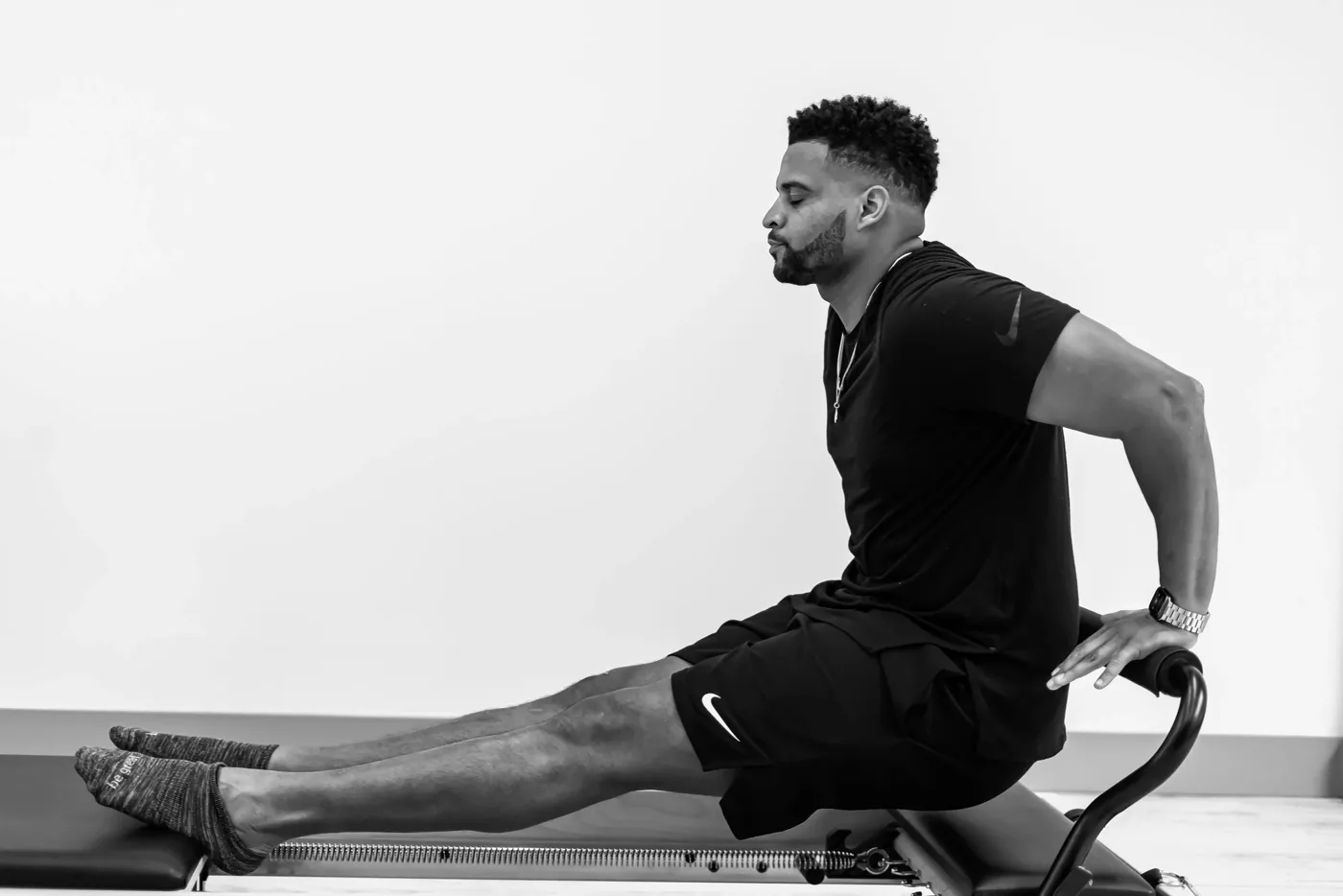
Learning Pilates involves learning a movement skill as well as exercising. You are trying to understand an instruction, organize your body, and respond to feedback while the carriage is doing its own very literal moving.
Progress can include better coordination and greater familiarity with the task, alongside changes in physical capacity. Research on resistance training describes contributions from neural adaptation to strength gains. That broader research helps explain why practice matters; it does not establish a precise Pilates timetable for every student.
Early learning takes attention
An unfamiliar exercise can demand conscious thought about almost every step. You may need demonstrations, reminders, or an easier variation. With practice, some parts become more familiar and leave more attention available for refinement.
These experiences overlap. You might feel confident in Footwork and brand new again when you learn Short Box. An advanced student learning a new task is still a learner.
Practice needs an appropriate challenge
Repeating an exercise gives you another opportunity to apply feedback. Your teacher can adjust the task so that you have something manageable to work on. Adding complexity before you understand the movement can make it harder to learn what the exercise is asking.
Physical training also needs a suitable balance of challenge and recovery. Soreness can follow unfamiliar exercise, but its presence or absence does not provide a complete measure of progress. Tell your teacher about symptoms that affect your ability to participate.
There is no universal graduation clock
Training history, health, attendance, exercise selection, and many other factors influence an individual experience. Development is an ongoing process. There is no promise of permanent transformation after a set number of months.
Track changes you can describe: understanding a setup, recalling an order, responding to a cue, or completing an appropriate routine with greater confidence. Those observations give you and your teacher a useful basis for the next lesson.
Keep asking better questions
Instead of asking when your body will be finished, ask what you are learning now and what would help you practice it. The goal is an informed relationship with movement that you can keep developing.
Research context: Siddique and colleagues’ review of neural adaptations to resistance training. This general training research does not establish a Pilates-specific development timetable.