What is Pilates · From Our Archive
Joseph H. Pilates: A Brief History of Classical Pilates
From Contrology to a worldwide movement practice: the story of Joseph, Clara, and the work they passed on.
2 minute read
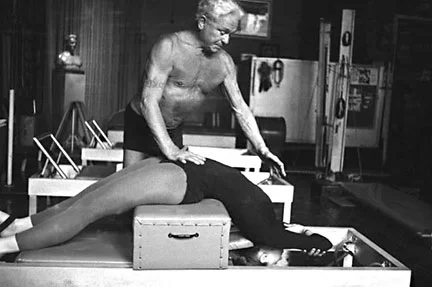
Nearly a century ago, German-born Joseph Hubertus Pilates developed a system of physical conditioning he called Contrology. Today, his work lives on through Pilates studios, teachers, and students around the world.
A lifelong interest in movement
Born near Düsseldorf in 1883, Joseph Pilates developed a strong interest in physical training. Gymnastics, bodybuilding, boxing, and other movement disciplines helped shape the ideas he later brought together in his own method.
He moved to England in 1912, working as a boxer and circus performer. During World War I, he was interned in Britain alongside other German nationals. He continued developing his approach to exercise and taught movement to fellow internees.
These experiences became part of the foundation for a method concerned with the coordinated work of body and mind: deliberate movement, practiced with attention.
Joseph and Clara in New York
After returning to Germany following the war, Joseph eventually set out for the United States. He and Clara established their New York studio in the 1920s, creating a place where movement, apparatus, and individual instruction could work together.
Their studio became well known in the dance community. Dancers sought the work for conditioning and support as they returned to movement. Over time, performers, athletes, actors, and other New Yorkers also became students.
For decades, Joseph and Clara taught at their studio at 939 Eighth Avenue. Clara was an influential teacher in her own right, helping students find ways into the work and carrying the method forward alongside the next generation of teachers.
More than the Reformer
Joseph’s work extended beyond a sequence of exercises. He designed apparatus to offer carefully controlled support and resistance, helping a teacher adapt movement to the student in front of them.
The Reformer is now the most recognizable piece of Pilates equipment, but the Cadillac, Wunda Chair, barrels, and other apparatus are also part of the broader practice. Each offers a different way to explore movement, control, and coordination.
His books, Your Health and Return to Life Through Contrology, preserve his writing about physical wellbeing and the relationship between body, mind, and movement.
A legacy that keeps moving
Joseph Pilates died in 1967 at the age of 83. Clara and the teachers who had studied with them continued passing on the work. That teaching lineage helped Pilates grow from a New York studio practice into an international movement community.
At The Pilates School SF, we are grateful for Joseph and Clara’s dedication. Their work continues to inspire us to help students build a practice that belongs to them: thoughtful, personal, and rooted in learning.
Now it’s your turn. You do not need to arrive with a particular “Pilates body.” Bring your curiosity, and start learning what your body can do.
Develop a Pilates Practice