
Pilates Workouts: Tips and Tricks · From Our Archive
The Four Parts of a Classical Pilates Workout
Preparation, the main work, supplemental exercises, and an intentional ending give a session its shape.
2 minute read
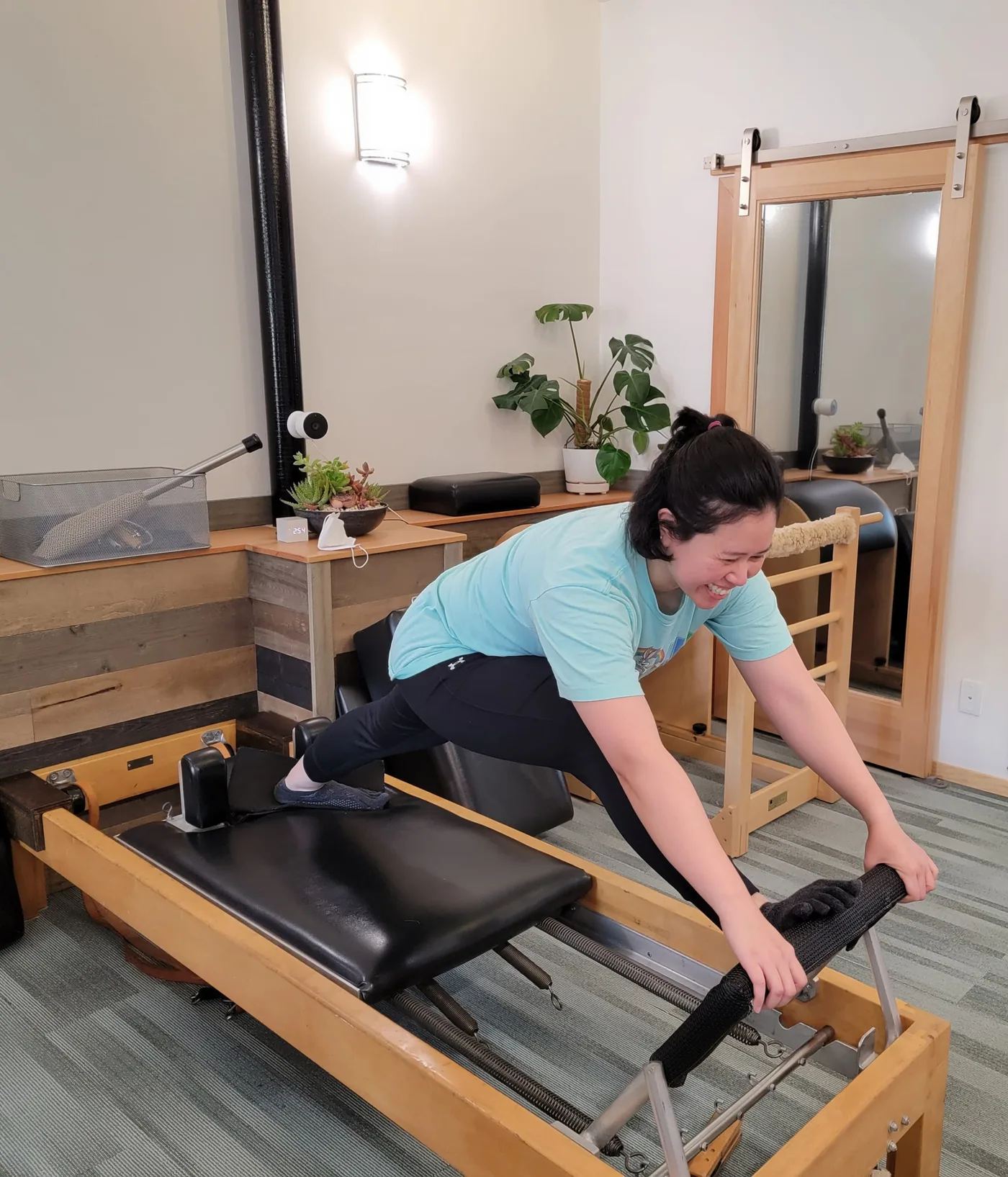
How does a teacher turn a room full of apparatus into a coherent workout? There is a plan beneath the springs. Our magazine describes a useful four-part structure: prepare, do the main work, address specific needs, and finish with intention.
Begin with preparation
A warm-up helps you arrive in your body and prepare for the work ahead. Your starting point depends on your level, the session, and what your teacher knows about you. It does not need to be a separate performance before the real workout begins.
Choose the main body of work
The central sequence might use the Mat, Reformer, Tower, or Wunda Chair. This is where you spend focused time developing familiar exercises and the relationships between them. An appropriate sequence gives you room to practice rather than constantly stop and decode new choreography.
Add exercises for a purpose
Supplemental work addresses something the main sequence revealed. You might need a different way to understand a movement, more support, or a focused challenge. This is where a teacher's observation helps. Extra exercises are useful when they answer a question, rather than simply fill the remaining minutes.
Finish deliberately
An ending gives the session a clear conclusion. Your teacher might choose a movement that brings attention to balance, posture, strength, or length, depending on your needs. Take a moment afterward to notice what you learned.
This structure is a planning tool, not a requirement to assemble your own equipment workout before you are ready. Ask your teacher to help you recognize the parts of your current routine. Understanding the plan is a step toward owning your practice.