
What is Pilates · From Our Archive
The History of the Wunda Chair
Small chair, big ideas. Explore the history and purpose of this compact Pilates apparatus.
2 minute read
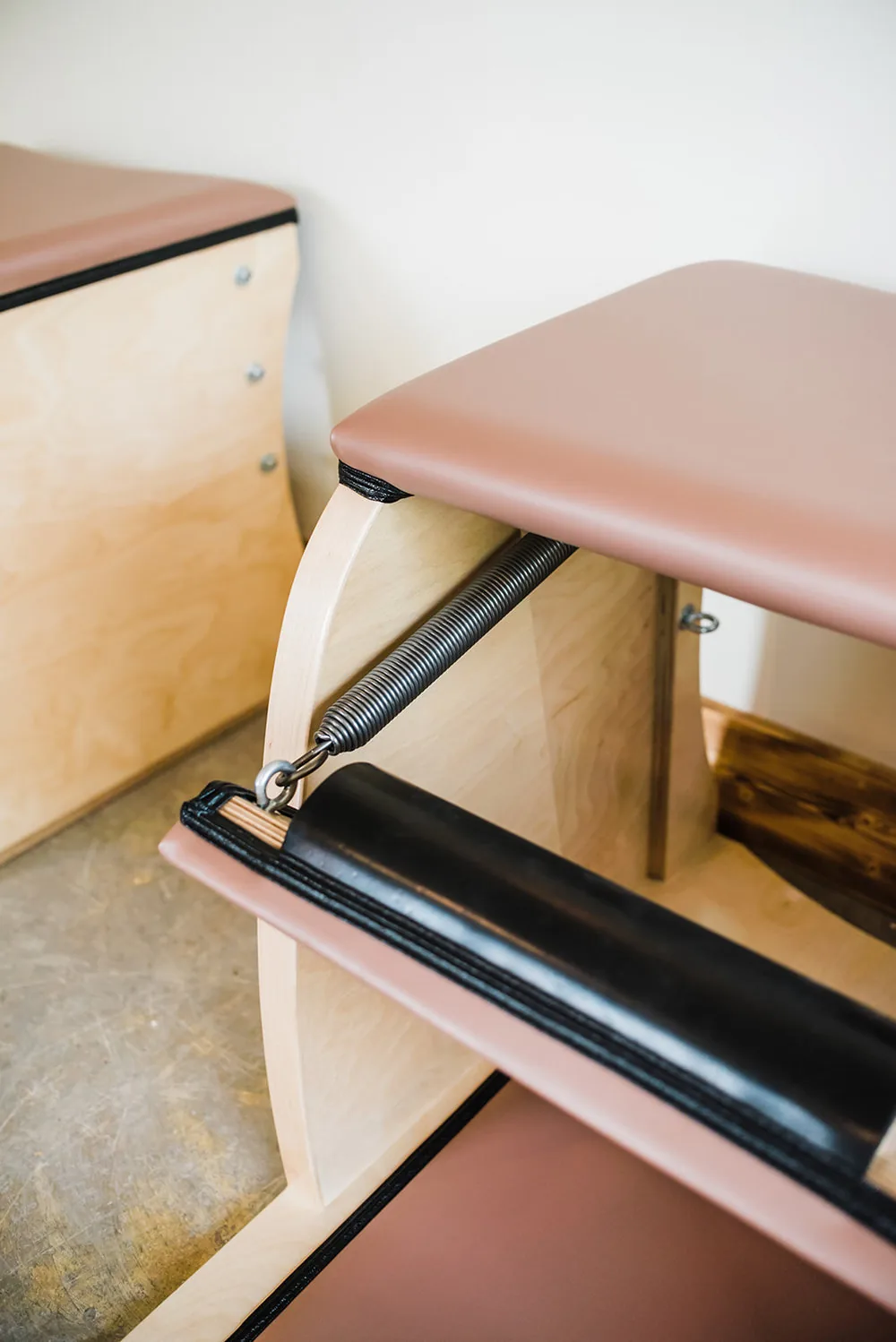
At first glance, the Wunda Chair looks almost too small to be responsible for that much work. A compact seat, a pedal, some springs. Then you try an exercise and discover that appearances were misleading.
Its size is part of the story. Joseph Pilates explored equipment that could bring movement into everyday surroundings, including a chair that could also be used for exercise. His chair patent was filed in 1931 and granted in 1934, placing this design earlier than the 1940s date given in our original magazine article.
Furniture with another purpose
The patent describes a chair convertible into an exercising device. That idea connects the apparatus to a broader ambition: making physical practice part of daily life. The familiar studio Wunda Chair belongs to that history, even though today's versions differ from the patent drawings.
In practice, its spring-loaded pedal gives the body a different relationship with support and resistance. Seated Footwork on a chair may help a student notice something they missed while lying on the Reformer. An exercise can feel surprisingly new when the body changes position.
Small changes make a difference
Contemporary chairs vary in dimensions, spring systems, pedal design, and available supports. Some have split pedals or removable handles. These differences affect the experience of an exercise, so the settings and instructions you learned on one chair may need adjusting on another.
The goal is to understand the purpose of the movement and the apparatus beneath you. Ask your teacher what a particular chair variation changes, and how to carry that lesson back to your other exercises.
The Wunda Chair is an invitation to look beyond the Reformer and discover more of the Pilates system. It is also a useful reminder that a workout does not need to occupy an enormous room to get your attention.
Historical source: Joseph Pilates’ chair patent, filed in 1931 and granted in 1934.